
Stoney’s Plumbing · Water Heater Options Guide
Best water heater options for Northern Virginia homes come down to matching tank, tankless, and hybrid heat-pump technology to real infrastructure—not to a neighbor’s anecdote. This guide compares how each type heats water, how to size for Loudoun peak hours, what gas lines, vents, electrical panels, and airflow must support, how moderately hard water changes maintenance, and which educational cost brackets belong in planning conversations. Figures here are not quotes from Stoney’s Plumbing. Stoney’s Plumbing is a veteran-owned residential plumber based at 574 Rockbridge Dr SE, Leesburg, VA 20175.
What are the best water heater options for Northern Virginia homes?
Choose a conventional storage tank when you need a straightforward replacement, familiar maintenance, and the lowest typical upfront planning bracket. Choose tankless when you want continuous hot water, can support the gas or electric demand, and will keep up with descaling in hard-water areas. Choose a hybrid heat-pump water heater when you heat with electricity, have adequate air volume and condensate routing, and want the largest category efficiency gain ENERGY STAR highlights versus standard electric resistance tanks. The figures on this page are educational ranges based on typical residential work, not Stoney’s quotes. Infrastructure and household peak demand decide the winner—not a single “best” label.
Local context: Leesburg, Ashburn, Sterling, and western Loudoun homes differ in closet size, fuel availability, well versus municipal water, and HOA rules. Start with the complete 2026 Leesburg plumber guide for hiring context, and read water heater repair vs replacement for Leesburg homes if your current unit might still deserve a repair. Call (703) 794-5592 or view Stoney’s Plumbing on Google Maps.
How Tank, Tankless, and Hybrid Heaters Work
Quick answer: Tanks store and reheat a volume of water. Tankless heats on demand through a heat exchanger. Hybrids move heat from room air into a storage tank and can fall back to resistance elements. Those mechanisms drive sizing, install, and maintenance differences.
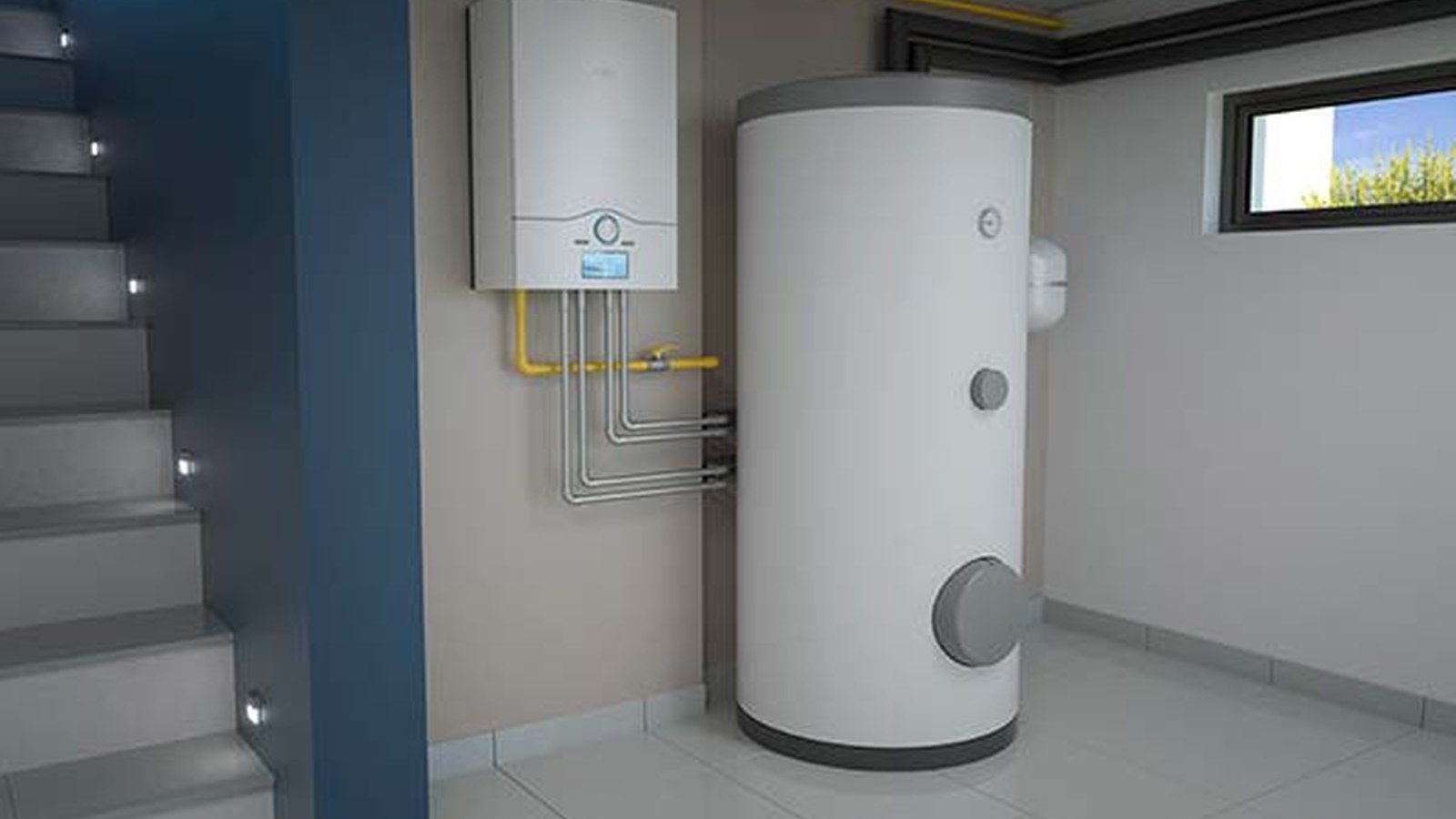
A conventional gas or electric storage tank keeps water hot in a glass-lined steel vessel. Standby heat loss is real; recovery rate and first-hour rating describe how the unit behaves under morning stacks. Anodes protect steel; sediment settles at the bottom; thermostats and elements (or burners) do the heating.
A tankless unit ignites or energizes only when flow is detected. Capacity is expressed in gallons per minute at a given temperature rise. Cold Northern Virginia groundwater in winter increases the rise required, which can reduce effective GPM compared with summer marketing charts. Condensing gas models need condensate drains; non-condensing models need appropriate high-temperature venting.
A hybrid (heat-pump) water heater uses a vapor-compression cycle to pull heat from surrounding air into the tank. ENERGY STAR materials on water heaters describe heat-pump models as using far less electricity than standard electric resistance tanks when operating in heat-pump mode. Most integrated hybrids can switch to resistance elements for high demand or cold ambient conditions—hence the “hybrid” name.
Tank strength
Simple swap path, familiar parts, predictable behavior for many Leesburg closets.
Tankless strength
Continuous hot water and wall space savings when fuel and venting are correct.
Hybrid strength
Category-leading electric efficiency with storage buffer when air and condensate work.
Side-by-Side Comparison for NOVA Homes
Quick answer: Compare footprint, fuel, install complexity, maintenance, noise, and peak-demand behavior—not only sticker efficiency.
| Factor | Storage tank | Tankless | Hybrid heat-pump |
|---|---|---|---|
| Hot water style | Finite stored volume | On-demand continuous (if sized) | Stored volume + efficient recharge |
| Typical footprint | Floor tank | Wall-hung, compact | Taller/larger than many tanks |
| Install complexity | Often simplest like-for-like | Gas/vent/electric often heavier | Airflow + condensate + circuit |
| Hard-water impact | Sediment, element/anode wear | Scale on exchanger—descale | Tank-side minerals + airflow dust |
| Noise | Usually quiet | Fan/burner during draws | Compressor hum like a fridge |
| Best fit signal | Budget + simple closet | High simultaneous demand + fuel ready | Electric home + airy basement/garage |
For how these paths sit beside drains, leaks, and sewer priorities, see the Leesburg services comparison. For dollar brackets across plumbing categories, use the 2026 Leesburg plumbing cost guide.
Sizing Storage Tanks and Tankless Units
Quick answer: Size tanks by first-hour rating against peak-hour use. Size tankless by GPM at winter inlet temperatures. Undersizing causes cold showers; oversizing wastes money and can short-cycle some designs.
Count real peaks: two showers overlapping, dishwasher starting, laundry mid-cycle. Work-from-home Loudoun households often redistributed demand into midday spikes that older “morning only” assumptions miss. Write the pattern down before you shop.
Storage tanks: manufacturers publish first-hour ratings that combine tank volume and recovery. A “50-gallon” label is not the whole story. If your household already empties a 40-gallon unit every school morning, repairing or replacing with another 40-gallon unit repeats the complaint.
Tankless: add fixture flow rates you might run together, then check the unit’s capacity curve at the temperature rise you need in January, not July. Northern Virginia inlet water can be cold enough that a unit advertised for high GPM in warm climates delivers less when it matters. Ask for the capacity chart, not only the brochure headline.
Hybrids: tank size still matters because heat-pump recovery is slower than full resistance heat. Many households upsize storage when moving from a standard electric tank to a hybrid so the buffer covers peaks while the compressor catches up. Follow manufacturer clearance and room-volume guidance.
A useful way to think about it: Capacity problems are not solved by efficiency stickers. An efficient undersized heater is still undersized.
Gas, Venting, Electrical, and Airflow Requirements
Quick answer: Tankless gas units often need adequate gas line capacity and correct venting. Electric tankless can demand large electrical service. Hybrids need airflow, condensate drains, and appropriate circuits. Conventional tanks still need safe T&P discharge, pans where required, and proper fuel connections.
| Type | Common infrastructure asks | NOVA gotcha |
|---|---|---|
| Gas tank | Vent path, combustion air, gas shutoff | Older atmospheric vents in tight remodels |
| Electric tank | Correct breaker and wire size | Shared circuits in older panels |
| Gas tankless | Larger gas supply, category vent, condensate if condensing | Long gas runs in townhomes; vent routing through finished floors |
| Electric tankless | High amperage, panel capacity | Many panels cannot support whole-home electric tankless |
| Hybrid | 240V circuit (typical), condensate, air volume | Sealed closets; cold garages cutting heat-pump mode time |
Licensed-trade boundary: Gas sizing, venting, new electrical circuits, and permitted replacements belong with licensed trades. Verify credentials through DPOR License Lookup and read DPOR tradesman program materials. Call Virginia 811 before digging for underground work.
Loudoun County building permits guidance is the starting point for asking whether your replacement or fuel change needs plumbing, gas, or electrical permits. This article is not a permit determination for your address.
Hard Water, Scale, and Maintenance Reality
Quick answer: Loudoun Water describes its central system as moderately hard to hard. That raises sediment and scale management for every heater type—especially tankless exchangers and electric elements.
Hardness is not a moral failing of your neighborhood; it is mineral content from source waters. Loudoun Water’s public education materials explain calcium and magnesium in the central system. Western Loudoun wells can differ—test rather than assume. White crust on aerators is a household clue, not a lab report.
- Tanks: periodic flushing where appropriate; anode inspection on serviceable designs.
- Tankless: manufacturer descaling intervals; inlet screens; possible pretreatment.
- Hybrids: tank-side mineral care plus air filters and condensate cleanliness.
EPA WaterSense Fix a Leak habits still matter beside heater choice—running toilets and faucet drips waste water whether your heater is tank or tankless. Pair heater strategy with whole-house leak awareness.
Honesty rule: If you will not schedule descaling, tankless ownership in hard-water Northern Virginia is a poor personality match. Choose a type you will maintain.
Educational Cost and Operating Brackets
Quick answer: Conventional tank replacements often plan roughly from about $900 into the mid-thousands before Northern Virginia labor, code accessories, haul-away, and permits. Tankless and hybrid projects frequently plan higher. Operating costs favor efficient hybrids on electric rates when placement is right; tankless savings depend on use patterns. None of these figures are Stoney’s quotes.
| Path | Educational install planning bracket | Operating note |
|---|---|---|
| Like-for-like tank | Often ~$900–$2,500+ before local adders | Familiar energy use for fuel type |
| Gas tankless conversion | Often well above simple tank swap | Lower standby loss; descaling cost |
| Hybrid install | Often above basic electric tank | Large electric savings potential if airflow OK |
| Electric tankless whole-home | Can climb with panel work | Only if service supports it |
Honesty rule for this section: Brackets are educational planning fences paraphrased from typical residential consumer ranges and hedged for Northern Virginia—not bids. Compare scopes. For broader plumbing cost context, see how much plumbing repair costs in Leesburg in 2026.
When Each Type Usually Wins
Quick answer: Match the win conditions below. If two types both fit, prefer the one whose maintenance you will actually perform.
Conventional tank wins when…
Early stage. Failed tank, need hot water restored, closet already designed for a tank, budget sensitive.
What happens if you force tankless instead. Gas or electrical surprises, longer downtime, higher change-order risk.
What a timely tank choice looks like. Correct first-hour rating, pan/T&P/expansion done right, permit handled, haul-away included in the scope conversation.
Tankless wins when…
Early stage. Recurring “ran out of hot water” with multiple simultaneous baths, wall space valued, fuel capacity verified.
What happens if fuel is inadequate. Nuisance cold-water sandwiches, lockouts, or unsafe DIY gas upsizing attempts.
What a timely tankless choice looks like. Winter GPM math, venting plan, water treatment plan, and a homeowner who accepts descaling.
Hybrid wins when…
Early stage. Electric resistance tank today, basement or garage with air volume, condensate route available, efficiency goal clear.
What happens in a sealed closet. Efficiency collapses into resistance mode; noise complaints rise; homeowner blames the technology unfairly.
What a timely hybrid choice looks like. Measured clearances, mode education, filter access, and realistic recovery expectations.
Northern Virginia Climate and Placement
Quick answer: Cold inlet water raises tankless temperature rise needs. Freeze risk hits exposed pipes and condensate lines. Humid basements can favor hybrids; cold garages can hurt them. Use regional forecasts and utility freeze guidance—not vibes.
The NWS Baltimore/Washington (Sterling) office covers the cold snaps and storm patterns Loudoun homeowners already feel. Pair that with Loudoun Water frozen-pipes guidance for hose bibs and unheated spaces. Heater placement in those unheated spaces is a technology decision: hybrids dislike chronically cold air; tanks still need freeze protection on nearby piping; tankless condensate can freeze if poorly routed.
Summer humidity in unfinished basements can make hybrid dehumidification a side benefit. That is a bonus, not a reason to ignore manufacturer room-volume rules. Attic installs are usually a bad idea for hybrids and many tanks—heat, access, and drip risk stack poorly.
For scheduling around seasons and demand, see when to schedule plumbing repairs in Leesburg. For how long installs and related jobs take, see repair duration in Leesburg.
Permits and Licensed-Trade Boundaries
Quick answer: Ask early which permits apply. Water heater replacements commonly appear on plumbing permit scopes; gas and electrical changes add their own. Unpermitted fuel switches create resale and safety problems.
- Ask who pulls the permit and whether fees are in the price.
- Ask about inspection sequencing before you finish cosmetic work around the unit.
- Ask whether expansion tanks, pans, and discharge piping are included.
- Ask which trade handles gas upsizing or new circuits.
- Do not DIY gas line expansion from a YouTube video.
- Do not skip CO awareness on combustion appliances.
- Do not energize equipment in standing water.
- Do not assume HOA mechanical-closet rules allow every vent path.
Site context pages such as Leesburg water heater repair vs replacement study and mechanical services help with navigation. Area pages for Ashburn, Sterling, and Aldie / South Riding reflect different housing patterns.
Seven Northern Virginia Scenarios
Quick answer: Pattern recognition only—measure your closet, fuel, and peak hour before buying.
Leesburg historic basement, atmospheric gas tank dying
Like-for-like or power-vent evaluation often beats a rushed tankless dream through finished floors. Combustion air and venting dominate.
Ashburn townhome, electric tank, sealed closet
Hybrid may need relocation or a conventional electric tank if airflow cannot be created. Do not force a heat-pump unit into a broom closet.
South Riding, two baths + kids, gas available, runs out daily
Larger first-hour tank or properly sized gas tankless are both on the table after gas capacity checks.
Purcellville well home, heavy mineral staining
Test water. Pretreatment may matter more than brand badges. Tankless without a treatment plan is a maintenance trap.
Lansdowne unfinished basement, electric panel has spare capacity
Hybrid is a strong candidate if clearances and condensate work. Educate the household on compressor sound.
Sterling condo, HOA rules, tiny mechanical niche
Footprint and venting rules may force a compact tank or a carefully approved tankless path. Read HOA documents before ordering equipment.
Hamilton / Round Hill, propane, long driveway garage install
Fuel type, freeze exposure, and garage temperature all matter. Hybrids in cold garages need honest ambient assessment; propane tankless needs correct orifice/regulator setup by qualified trades.
Options Myths That Waste Money
Quick answer: “Tankless is always best,” “hybrids work in any closet,” and “the biggest tank is always safer” are expensive myths.
“Tankless never runs out, so everyone should switch.”
Tankless runs out of capacity when GPM demand exceeds the unit at the current temperature rise. Simultaneous showers plus laundry can still lose. Sizing and fuel matter.
“Hybrids are silent and fit anywhere.”
Compressors hum. Clearances and air volume are real. Stuffing a hybrid into a sealed niche creates support tickets, not savings.
“A huge tank solves every problem.”
Oversized tanks increase standby loss and take space. Match first-hour rating to peaks; do not buy volume as a security blanket without math.
“Efficiency stickers replace maintenance.”
Scale does not read UEF labels. Descale, flush, and filter on the schedule your water and equipment require.
“Online DIY kits make fuel switching easy.”
Fuel switching is a licensed-trade project with permits. Shortcuts create CO and fire risk.
What Homeowners Can Safely Prepare Before Choosing
Quick answer: Photograph nameplates, measure closet clearances, note fuel type, list peak-hour fixtures, and gather breaker panel photos. Leave gas and heavy electrical work to licensed pros.
- Nameplate and age of the current heater
- Photos of venting, gas meter area, and electrical panel
- Tape measurements of closet width, depth, height, and door swing
- Household peak-hour notes for a typical weekday
- Water quality clues (crust, well vs municipal)
- HOA or condo rules if they apply
Conventional Tanks: Ownership Details Northern Virginia Homeowners Miss
Quick answer: Recovery rate, first-hour rating, anode care, and expansion control matter as much as gallon legends.
Storage tanks remain the default for a reason: plumbers know the failure modes, parts are widely available, and many Leesburg closets were literally framed around a tank footprint. That familiarity is a feature when a heater fails and the household needs hot water restored without redesigning the mechanical room.
First-hour rating combines how much hot water is stored with how fast the burner or elements can reheat. Two “50-gallon” tanks can behave differently under a school-morning stack. Read the rating on the label and compare it to your overlapping fixture list. If you already know the current tank empties, replacing with the same rating repeats the complaint—even if the new tank is more efficient on paper.
Anode rods sacrifice themselves to protect steel. In hard-water areas, anodes can deplete faster. Homes that never opened the tank may discover a stump of anode and a lining that has already started to fail. Flushing helps manage sediment on many designs; it does not resurrect a rusted shell. Expansion tanks and correctly routed T&P discharge protect the system when check valves or pressure-reducing valves are present—common in modern Loudoun builds.
Gas tanks need correct venting and combustion air. Electric tanks need correct wire and breaker sizing. Neither is optional. A cheap online tank that arrives without a plan for pan, discharge, permit, and haul-away is not a complete project.
Tankless Systems: Capacity Curves, Cold Water, and Descale Discipline
Quick answer: Winter inlet temperature and simultaneous fixtures set real GPM. Descaling is part of ownership in hard-water Northern Virginia.
Tankless marketing loves the word endless. Engineering loves capacity charts. At a high temperature rise—cold January groundwater into a 120°F setpoint—the same unit delivers fewer gallons per minute than it does in August. Northern Virginia winters make that chart reading mandatory. Ask to see performance at your expected rise, not only at a mild-climate rise.
Minimum flow rates also surprise people. A tankless unit may ignore a trickle from a bathroom faucet while happily serving a shower. That is design behavior. Aerators, parallel fixtures, and recirculation strategies change the experience. Recirc loops add complexity and energy use; they are not automatic with every install.
Scale is the recurring villain. Minerals plate onto heat exchangers, sensors foul, and error codes appear. Professional descaling and inlet filtration are normal ownership costs. Pretreatment (softening or other strategies appropriate to your water) can be part of a durable tankless plan—especially on well water in western Loudoun. Skipping all of that and then blaming the brand is a category error.
Gas tankless installs often require larger gas lines and specific vent categories. Condensing units need condensate disposal. Electric whole-home tankless units can demand panel upgrades many Northern Virginia homes do not have. Measure before you fall in love with a wall-hung photo.
Hybrid Heat-Pump Water Heaters: Air, Condensate, and Mode Reality
Quick answer: Hybrids shine with air volume and moderate ambient temperatures. Resistance fallback is normal—not a defect—when demand or cold air requires it.
Heat-pump water heaters move heat rather than creating it with resistance coils alone. ENERGY STAR education emphasizes large efficiency gains versus standard electric tanks when the compressor does most of the work. That “when” clause is the whole local story.
Air volume and clearance matter. A unit stuffed into a sealed closet with no make-up air will not deliver brochure savings. Dusty unfinished rooms need filter attention. Condensate must go somewhere safe—not onto unfinished subfloors to grow problems. Noise is usually a soft compressor hum; households sensitive to mechanical sound should hear a unit before committing if possible.
Cold garages push hybrids into resistance mode more often. That can still beat a pure resistance tank over a year, but the savings shrink. Basements that stay in the 50s–60s°F much of the year are often better candidates than uninsulated garages that hit the 30s.
Hybrid tanks are often taller and need more overhead clearance than the electric tank they replace. Measure height, door swing, and drip pan strategy. If the only location is wrong for heat-pump physics, a conventional electric tank—or a planned relocation—beats a forced bad install.
Fuel Switching: Gas, Electric, and Propane Decisions
Quick answer: Switch fuels only with panel, gas supply, venting, and code paths designed on purpose. Emergency like-for-like usually stays on the existing fuel.
Moving from gas to electric hybrid can make sense for efficiency goals if the panel and placement support it. Moving from electric to gas requires gas availability, venting, combustion air, and permitting. Moving to propane adds regulator and orifice correctness. None of these are casual afternoon swaps.
Emergency failures favor staying on the current fuel unless you already completed redesign planning. Planned remodels—kitchen expansions, basement finishes, panel upgrades—are the natural moments to reconsider fuel. Tie the heater decision to those projects so you are not paying twice for mechanical room changes.
Utility rates and availability vary. This guide does not quote utility tariffs. Pull your own electric and gas history if operating cost is a primary motive. Then compare equipment paths with install costs included, not efficiency stickers alone.
How to Read a Water Heater Options Estimate
Quick answer: Separate equipment, redesign trades, accessories, permits, and exclusions. A low tankless number that omits gas upsizing is not a bargain.
| Line item | Why it appears | Question |
|---|---|---|
| Equipment | Specific model and capacity | Exact SKU and rating? |
| Labor set/connect | Removal and install | What is included? |
| Gas or electrical redesign | Type-change realities | Which trade? Allowance? |
| Vent / condensate | Category and drain needs | Routing path approved? |
| Water treatment | Hard-water durability | Required vs optional? |
| Permit / inspection | County or town rules | Who pulls? Fee in price? |
| Accessories | Pan, expansion, valves | Included? |
| Exclusions | Drywall, paint, unforeseen | Change-order rules? |
When comparing a tank bid to a tankless bid, you are often comparing different projects. Normalize scopes or you will pick the incomplete number every time.
Peak Demand Patterns in Loudoun Households
Quick answer: School mornings, work-from-home midday spikes, and guest weekends stress heaters differently. Size for the peak you actually live.
Traditional sizing stories assume everyone leaves for work and school, then returns to evening showers. Many Loudoun households now run dishwashers between meetings, start laundry at noon, and host hybrid workdays with overlapping handwashing. Midday peaks matter.
Teen sports schedules create evening stacks: back-to-back showers after practice. Guest rooms for relatives visiting the DC area create weekend stacks. If your pain is only “Thanksgiving weekend,” a larger tank or temporary schedule changes may beat a full type change—honest conversation required.
Medical or caregiving needs for reliable warm water lower downtime tolerance. That can justify earlier replacement planning and spare inventory thinking without inventing service promises this site does not make.
Condos, Townhomes, and HOA Constraints
Quick answer: Vent paths, closet sizes, and association rules can veto otherwise sensible equipment. Read documents before ordering.
Stacked townhomes limit where power-vent pipes and tankless vents can terminate. Condos may restrict exterior penetrations. Mechanical niches built for a 1990s electric tank may not fit a taller hybrid. HOA aesthetic rules sometimes affect flue terminations on street-facing walls.
Get written clarity when rules are fuzzy. Ordering equipment first and asking forgiveness later is how projects stall with a heater sitting in a box. For multi-family buildings, confirm whether the unit is homeowner responsibility or association scope before you authorize work.
Well and Septic Considerations in Western Loudoun
Quick answer: Private wells vary in mineral content; septic systems care about water volume. Test water and think beyond the mechanical closet.
Municipal Loudoun Water customers can lean on published hardness education. Well owners should test. Iron, hardness, and sediment change anode life, tankless scaling, and filter strategies. A heater choice made without water data is incomplete for many Purcellville, Hamilton, and Round Hill properties.
Softening and treatment systems interact with manufacturer coverage terms (read the equipment maker’s documents) and with drain discharges. Coordinate trades so the treatment plan and heater plan do not fight each other.
High-volume tankless showers increase water through septic systems. That is usually fine within design limits, but extreme lifestyle changes deserve a quick reality check with your septic professional if the system is already marginal.
Distribution Piping, Recirc, and Wait Times
Quick answer: Heater type does not erase long pipe runs. Recirc and insulation change wait times and energy use.
A powerful tankless unit at the far end of a long pipe run still makes you wait for hot water at a distant powder room. Storage tanks have the same delivery delay. Insulation on hot lines helps. Recirculation systems can provide near-instant hot water at the cost of energy and complexity—timer or demand-controlled designs differ.
Point-of-use heaters under distant sinks are sometimes a smarter answer than upsizing the whole-home unit for one rarely used faucet. That is an options conversation, not a default upsell slogan.
Galvanized or aging distribution lines elsewhere in historic Leesburg homes can limit flow independently of heater choice. If faucets are weak on cold and hot, the heater may not be the bottleneck.
Noise, Vibration, and Household Tolerance
Quick answer: Tanks are usually quiet; tankless fans and hybrid compressors add sound. Place equipment where sleep and office calls will tolerate it.
Basement hybrids under home offices need honest noise expectations. Closet tankless units near bedrooms may be audible at night when someone showers. Rubber isolation and solid mounting help but do not create silence.
If the household is noise-sensitive, conventional tanks often remain the path of least regret. Efficiency goals should not override the ability to sleep.
Safety Features Across Types
Quick answer: T&P valves, CO awareness for combustion appliances, electrical disconnects, and drip pans are non-negotiable parts of a complete install.
Every storage tank and many hybrid units rely on temperature-and-pressure relief protection. Discharge piping must terminate safely. Combustion appliances need correct venting and CO detectors elsewhere in the home per good practice—follow detector manufacturer instructions and local code expectations.
Electric equipment needs dry footing and proper disconnects. Standing water plus electricity is a hard stop. Gas smell is a hard stop. This options guide assumes those safety basics are settled before anyone debates UEF numbers.
Need Help Choosing Tank, Tankless, or Hybrid in Northern Virginia?
If you are replacing a failed heater or planning an upgrade for a Leesburg or Loudoun home, call Stoney’s Plumbing at (703) 794-5592. We will help match technology to your fuel, space, water, and peak-hour demand, explain options before work begins, and keep educational ranges separate from a scoped recommendation. Bring nameplate and panel photos if you have them.
Owning Cost Over Ten Years—A Planning Frame
Quick answer: Add install, energy, maintenance, and likely mid-life repairs. Do not stop at equipment stickers.
Sketch three columns: tank, tankless, hybrid. In each, put educational install brackets, a rough energy story from your utility history and ENERGY STAR category guidance, and maintenance you will actually buy (flush, descale, filters). Add a line for risk: tankless without descaling, hybrid in a bad closet, undersized tank.
The “winner” is often the column with the fewest fantasy assumptions. A slightly higher install number with honest maintenance can beat a low sticker that implies zero upkeep.
Revisit the sketch after site measurements. Gas upsizing can flip a tankless column overnight. Panel limits can flip electric tankless to impossible. Airflow limits can flip hybrid back to electric tank.
Families, Roommates, and Changing Occupancy
Quick answer: Choose for the household you will have for the next several years—not only last month’s routine.
New babies, aging parents moving in, and roommate turnovers change peak demand. If a sale is likely within a year, like-for-like simplicity may beat a specialized install buyers might not understand. If you plan to stay and grow the household, capacity headroom matters more.
Rental properties need durable, serviceable choices and clear tenant instructions for breakers and shutoffs. Exotic setups without local parts support create midnight headaches.
Putting the Northern Virginia Options Decision Together
Quick answer: Measure fuel, space, water, and peaks. Then pick tank, tankless, or hybrid—or decide the current unit still deserves repair first.
Start with infrastructure. Confirm fuel and electrical reality. Measure the room. Note hardness clues. Write the peak-hour list. Then map win conditions: tank for simple and sturdy, tankless for continuous flow with maintenance appetite, hybrid for electric efficiency with air and condensate.
If the current heater might still be sound, read the companion repair versus replacement guide before shopping new equipment. Buying a hybrid to replace a tank that only needed an element is an expensive category error.
Stoney’s Plumbing at 574 Rockbridge Dr SE, Leesburg, VA 20175 can help Leesburg and Loudoun homeowners walk the options with measurements in hand. Call (703) 794-5592.
Efficiency Math Without Fantasy Savings
Quick answer: Use category guidance from ENERGY STAR and your own utility history. Do not paste national average savings as your personal promise.
Heat-pump water heaters can cut electric water-heating energy dramatically versus resistance tanks when they operate in heat-pump mode. Tankless can reduce standby loss versus storage tanks. Real household savings depend on setpoints, pipe insulation, hot-water use volume, and maintenance. A two-person empty-nest home saves differently than a six-person sports household.
Rebate programs change. Verify current eligibility with your utility and any manufacturer requirements. Put rebate constraints into the model choice so you do not buy ineligible equipment for a form you never read.
This page does not invent dollar savings for your address. It points you to category education and local install realities.
Planning Timeline: Emergency Swap vs Upgrade Project
Quick answer: Failures favor like-for-like speed. Upgrades favor measured weeks with permits and parts coordinated.
When the tank is open and water is on the floor, the rational project is often the fastest safe like-for-like replacement that restores hot water and meets code accessories. Type changes add design time: gas calculations, electrical assessments, vent routes, HOA emails, and equipment lead times.
If you want tankless or hybrid and the current unit is only limping—not dead—use the remaining time to measure and plan. That is the calm path described in the best-time scheduling guide. If the unit is already leaking, contain damage first and choose the path that fits the clock you actually have.
Duration expectations for plumbing work sit in the Leesburg repair timing article. Heater swaps that look like “two hours on YouTube” become half-day or longer jobs once pans, expansion, permits, and testing are included.
Common Selection Mistakes We Want You to Avoid
Quick answer: Buying capacity from a flyer, ignoring winter GPM, skipping airflow checks for hybrids, and comparing incomplete bids.
- Ordering tankless from a big-box aisle without gas capacity checks
- Forcing hybrids into sealed closets because the efficiency label looked impressive
- Replacing a too-small tank with the same too-small tank
- Ignoring descaling when your fixtures already show crust
- Accepting a bid that excludes permits and accessories without noticing
- Fuel switching mid-emergency without electrical or gas redesign
Avoiding those mistakes matters more than memorizing brand names. Technology is secondary to fit.
Questions to Bring to the Options Visit
Quick answer: Ask about winter capacity, airflow, condensate, permits, treatment, and what happens if the first plan fails site measurements.
- What first-hour rating or GPM at winter rise do you recommend for our peak list?
- Does this closet support hybrid airflow and condensate as designed?
- What gas or electrical changes appear if we choose tankless?
- What water treatment or descaling plan matches our hardness clues?
- Which permits apply, and who pulls them?
- What accessories are included versus optional?
- If measurements kill plan A, what is plan B on the existing fuel?
Resale and Inspection Angles for Heater Choices
Quick answer: Working, permitted, documented equipment reduces friction. Exotic installs without paperwork create questions.
Inspectors look for active issues: leaks, improper T&P discharge, missing pans where required, and unsafe combustion setups. A clean conventional tank install with paperwork often reads simpler than an unpermitted tankless experiment. That does not mean upgrades hurt value; it means documentation and safety matter.
If you are selling, fix dead heaters and obvious hazards first. Whether a premium hybrid helps marketing depends on buyers and listings—not invented ROI percentages. Pair heater readiness with other plumbing items from the home-value plumbing guide.
A Practical Maintenance Calendar by Type
Quick answer: Tanks: flush/anode cadence. Tankless: descale cadence. Hybrids: filters, condensate, plus tank-side basics.
Spring: check for winter freeze damage on nearby piping; verify T&P discharge path is clear; listen for new tank noises after heavy winter use.
Summer: good window for planned upgrades and non-emergency type changes when freeze risk is low—see scheduling guidance linked earlier.
Fall: descale tankless before holiday guest loads; clear hybrid filters; confirm condensate lines before cold weather; winterize hose bibs per Loudoun Water tips.
Winter: watch recovery during cold inlet weeks; do not ignore error codes; keep mechanical rooms accessible—not blocked by holiday storage.
Thinking About Equipment Quality Without Brand Worship
Quick answer: Favor correct sizing, parts availability, and install quality over logo loyalty. Spec sheets and site fit beat advertising.
This guide intentionally avoids steering you to a single manufacturer. Residential tanks, tankless units, and hybrids from major makers can all succeed when sized and installed correctly—and all can disappoint when jammed into the wrong closet with the wrong fuel feed.
Ask about parts availability locally, clear installation manuals, and whether the model is appropriate for hard water with the maintenance plan you will follow. A slightly less famous unit installed correctly usually beats a trophy model installed wrong.
Read the rating plate: capacity, voltage, gas type, and vent category. Propane and natural gas are not interchangeable without conversion by qualified people. Electric elements come in different wattages; mismatching them creates recovery surprises.
Basements, Garages, Crawlspaces, and Closets
Quick answer: Each location biases which technology behaves well. Match physics to the room you actually have.
Basements: often friendly to hybrids if dry, warm enough, and spacious. Watch for floor drains for T&P and condensate. Historic Leesburg basements may have low headroom—measure hybrid height carefully.
Garages: convenient for service access, risky for freeze exposure on piping and for hybrid ambient temperatures. Insulate and place thoughtfully. Vehicle impact protection may be required in some layouts.
Closets: classic for tanks; often hostile to hybrids without louvered doors or relocated air paths. Tankless wall units can fit, but combustion air and vent terminations still need legal paths.
Crawlspaces: usually poor primary locations due to access, moisture, and freeze risk. Keep heaters in conditioned or semi-conditioned mechanical rooms when you can.
Simultaneous Fixture Math You Can Do at Home
Quick answer: Add the fixtures you truly run together; do not add every faucet in the house “just in case.”
List fixtures that overlap in your real life: two showers at 2.0 GPM each after WaterSense heads, a dishwasher draw, a laundry hot fill. Sum the ones that actually coincide. Then compare to tankless charts at winter rise or to tank first-hour ratings.
People oversum by including the hose bib, the unused guest shower, and the kitchen sink “maybe.” That pushes them into oversized equipment and higher install cost. Undersumming is worse—cold showers—but fantasy oversumming is how budgets explode.
WaterSense-labeled fixtures can reduce hot-water flow needs. That sometimes lets a smaller heater succeed. It is not a reason to ignore leaks; EPA WaterSense leak-fixing habits still save water independently of heater choice.
Setpoints, Scald Risk, and Mixing Valves
Quick answer: Higher tank setpoints with mixing valves can stretch capacity; they also raise scald risk if mixing fails. Choose thoughtfully.
Many households run tanks around 120°F for scald safety and energy reasons. Some store hotter and mix down at the outlet to increase effective capacity. That strategy needs correct mixing valve installation and awareness that children and elders are more vulnerable to scalds.
Tankless units also have setpoint controls and sometimes remote controllers. Household members should know how to avoid accidental high-temp settings. This is education, not a scare tactic—hot water systems deserve respect.
Power Outages and Fuel Continuity
Quick answer: Electric and hybrid units stop heating without power. Gas tanks may still operate depending on controls. Plan realistically for storm weeks.
Northern Virginia storms and winter events occasionally interrupt power. If your contingency planning assumes endless hot water during multi-day outages, only certain gas configurations help—and even then, pumps and well systems may be down. Do not buy equipment based on rare outage edge cases unless that edge case is central to your household needs.
Generators change the math if sized for heater loads. Whole-home electric tankless on a small generator is usually fantasy. A gas tank with standing pilot or appropriate controls may be more outage-tolerant. Discuss specifics with whoever designs your backup power—not with a heater brochure alone.
Retrofit Sequencing in Finished Homes
Quick answer: Open walls once when possible. Coordinate vent, drain, and electrical paths with other remodel work.
Finished Loudoun basements and kitchen remodels are prime times to relocate heaters or upgrade types. Running a new vent or condensate line before drywall closes is cheaper than fishing later. If you are already remodeling, tell the plumber early so the heater plan is not an afterthought on move-in week.
Partial openings for like-for-like swaps should still protect finishes. Ask about floor protection, pan placement, and how discharge piping will look in a visible utility area.
Final Options Checklist Before You Buy Equipment
Quick answer: Infrastructure measured, peaks listed, water noted, permits planned, maintenance accepted, bid scopes aligned.
- Fuel and electrical capacity confirmed
- Room measurements and clearances recorded
- Peak-hour fixture list written
- Hard-water or well-test context noted
- Type chosen with maintenance appetite matched
- Permit path identified via Loudoun guidance and your plumber
- Bid includes accessories and exclusions clearly
- DPOR license verified for involved trades
- Plan B on existing fuel if redesign fails
- Nameplate of old unit photographed for disposal and records
Bring the checklist to Stoney’s Plumbing when you call (703) 794-5592. It turns a vague “what do you recommend?” into a productive site conversation.
Editorial Boundaries for This Options Guide
Quick answer: Educational ranges only; no local company comparisons; no testimonials; hedged local water and climate facts; authority links only from the approved set.
Cost figures are planning fences. Permit language is general. Hard-water notes paraphrase Loudoun Water education. Climate context points to NWS LWX. Efficiency comments point to ENERGY STAR category pages. License verification points to DPOR. Locates point to VA811.
If on-site measurements disagree with a general recommendation here, the measurements win. That is the correct hierarchy for local plumbing decisions.
Step-by-Step Selection Walkthrough
Quick answer: Confirm whether repair is still rational, measure infrastructure, list peaks, shortlist types that fit, then compare complete bids—not stickers.
Step 1: Decide if the current unit is a repair candidate using vessel integrity logic from the companion Leesburg repair-versus-replacement guide. Do not shop hybrids to replace a tank that only needs a thermostat.
Step 2: Photograph the nameplate, panel, venting, and closet. Measure clearances. Note fuel. Write the weekday peak list. Note hardness clues or well-test results.
Step 3: Eliminate types the house cannot support. No gas capacity for high-GPM tankless? Eliminate or budget redesign. Sealed closet with no airflow fix? Eliminate hybrid or plan relocation. Panel full? Eliminate electric tankless whole-home dreams.
Step 4: Among remaining types, score maintenance appetite honestly. If descaling will never happen, tankless drops. If compressor noise will bother a bedroom above the basement, hybrid drops or moves.
Step 5: Request scoped bids with accessories, permits, and exclusions listed. Compare inside one strategy first. Only then compare strategies if two types still remain.
Step 6: Authorize work, keep documentation, and schedule the first maintenance reminder before you forget. Ownership starts on install day, not on the day the first error code appears.
This walkthrough is deliberately unflashy. Northern Virginia homes reward measurement over slogans. Stoney’s Plumbing at 574 Rockbridge Dr SE, Leesburg, VA 20175 can run the walkthrough with you at (703) 794-5592.
Stoney’s Plumbing in Leesburg
Quick answer: Stoney’s Plumbing is a veteran-owned residential plumber at 574 Rockbridge Dr SE, Leesburg, VA 20175. Call (703) 794-5592.
We help Northern Virginia homeowners compare tank, tankless, and hybrid options with clear explanations of infrastructure and maintenance—not brochure slogans. Educational ranges on this page stay separate from scoped recommendations after a site look.
Visit Stoney’s Plumbing or find us on Google Maps. Address: 574 Rockbridge Dr SE, Leesburg, VA 20175. Service conversations commonly cover Leesburg, Loudoun County, Ashburn, Sterling, Lansdowne, Aldie, South Riding, Purcellville, Hamilton, and Round Hill.
Frequently Asked Questions About Water Heater Options in Northern Virginia
What is the best water heater type for Northern Virginia homes?
There is no single winner. Conventional tanks win on simple like-for-like swaps and lowest upfront planning brackets. Tankless wins when gas/electric capacity, venting, and descaling discipline support endless hot water in a small footprint. Hybrid heat-pump units win for electric households with adequate air volume and cooler-but-not-frigid mechanical spaces. Match infrastructure first.
How do I size a storage tank for a Loudoun County house?
Use first-hour rating and peak-hour household demand—not gallon legends alone. Count overlapping showers, laundry, and dishwashing. When in doubt, measure real patterns for a week before you buy.
How do I size a tankless unit?
Size by required gallons per minute at your incoming groundwater temperature and fixture count. Cold winter inlet water in Northern Virginia raises the temperature rise the unit must deliver, which can lower effective GPM versus summer.
Are hybrid heat-pump water heaters worth it in Leesburg basements?
Often yes when the space has roughly enough air volume, stays warm enough for heat-pump mode much of the year, and can route condensate. Tiny sealed closets and very cold garages can erase the efficiency story. ENERGY STAR category guidance emphasizes placement.
Does hard water rule out tankless?
No, but it raises maintenance. Loudoun Water describes its central system as moderately hard to hard. Plan descaling and consider pretreatment. Skipping maintenance is how tankless ownership goes badly.
What educational install cost ranges should I expect?
Conventional tank replacements often plan roughly from about $900 into the mid-thousands before local adders. Tankless and hybrid projects frequently plan higher because of gas, vent, electrical, or condensate work. These are not Stoney’s quotes.
Do I need permits to change water heater types in Loudoun?
Many replacements involve plumbing permits; gas-fired changes commonly involve gas permitting; electrical upgrades may need electrical permits. Confirm with Loudoun County building permits guidance for your scope—this page is not a permit determination.
Can I switch from gas tank to hybrid electric easily?
Only if electrical service, breaker space, and placement support it. Fuel switching is a redesign, not a drop-in. Measure panel capacity before shopping.
What maintenance does each type need?
Tanks: flushing where appropriate, anode checks, T&P awareness. Tankless: descaling and inlet filtration discipline. Hybrids: filter/airflow care, condensate checks, plus tank-side basics.
Is tankless always more efficient than a tank?
Tankless avoids standby loss, but real-world savings depend on use patterns, setpoints, and maintenance. Hybrids often deliver the largest electric savings versus standard resistance tanks when placed correctly.
What are licensed-trade boundaries for installs?
Gas lines, venting, combustion, new electrical circuits, and permitted replacements belong with licensed trades. Verify Virginia credentials through DPOR License Lookup.
Should I replace like-for-like in an emergency?
Like-for-like is often the fastest path after a failure if the old type still fits your needs. Planned upgrades to tankless or hybrid belong in calmer scheduling with infrastructure measured first.
Where can I learn repair-versus-replace first?
See our companion Leesburg guide on water heater repair vs replacement when the open question is whether the current unit deserves another part—or a new appliance.
Where is Stoney’s Plumbing located?
Stoney’s Plumbing is at 574 Rockbridge Dr SE, Leesburg, VA 20175. Call (703) 794-5592. The veteran-owned residential plumber serves Leesburg, Loudoun County, and Northern Virginia communities including Ashburn, Sterling, Lansdowne, Aldie, South Riding, Purcellville, Hamilton, and Round Hill.
Find Stoney’s Plumbing in Leesburg
Choose the Heater Type Your Northern Virginia Home Can Actually Support
If you are comparing tank, tankless, and hybrid options for a Leesburg or Loudoun County home, call Stoney’s Plumbing at (703) 794-5592. We will help match technology to fuel, space, water, and peak demand, explain options before work begins, and keep educational ranges separate from a scoped plan. This guide helps you ask better questions. Site measurements answer them.
574 Rockbridge Dr SE, Leesburg, VA 20175 · Serving Leesburg, Loudoun County & Northern Virginia